

A fair dismissal is shaped by the process before the final decision, not just the wording of the termination letter. When dismissing an employee, uncertainty about the right process can lead to rushed decisions, inconsistent records and avoidable disputes.
When a workplace issue reaches this point, a clear process can help you decide what to do next. The right steps depend on why employment is ending and the circumstances involved. A structured approach helps employers assess the situation, hear the employee’s response and record the reasons for their decision.
This guide explains how dismissal differs from resignation, redundancy and other ways employment can end in Australia. It covers practical steps for addressing performance, conduct or business-related concerns, documenting evidence and responses, and checking final pay and other obligations. It also explains when workplace relations advice can help clarify the process before a decision is made.
Key Takeaways
- Identify why employment is ending before choosing a process or communicating a proposed outcome.
- Check the evidence, employment terms and relevant workplace documents before deciding how to proceed.
- When dismissing an employee, give them a meaningful opportunity to respond and consider their explanation before making a decision.
- Match the process to the circumstances, including whether the concern involves performance, conduct or business needs.
- Record the decision and check written confirmation, notice and final-pay obligations before closing out the employment.
Dismissing an Employee: Identify the Situation Before Taking Action
A dismissal occurs when an employer ends an employee’s employment. The reason for the decision, the employment arrangements and applicable workplace requirements can all affect the appropriate process. Before discussing an outcome, identify what has happened and why the employment may end. Getting this classification right helps you choose a suitable process and keep records that accurately reflect the reason.
Separate the facts from the label attached to the situation. If concerns relate to capability, conduct or business needs, record the underlying details rather than describing the matter as a dismissal before it has been assessed. Avoid shaping documents to support a conclusion already reached. Notes should accurately show the concern, the information considered and what still needs clarification.
How dismissal differs from redundancy and resignation
Redundancy concerns a role no longer being required, rather than an individual’s conduct or performance. A resignation is initiated by the employee, although the surrounding facts matter if the decision was pressured or is disputed. A fixed-term arrangement may also end when its agreed term or event occurs. Consider the contract and circumstances before treating the end date as decisive. For a closer look at role-based changes, see this Australian redundancy guide.
These distinctions affect the process. If a position is still required but there are ongoing performance concerns, that is different from a genuine change in the organisation’s need for the role. Describing a performance matter as redundancy can obscure the real reason and lead to an unsuitable process. Likewise, don’t assume an employee has resigned if their account or surrounding communications suggest otherwise.
What circumstances can lead to an employer dismissal?
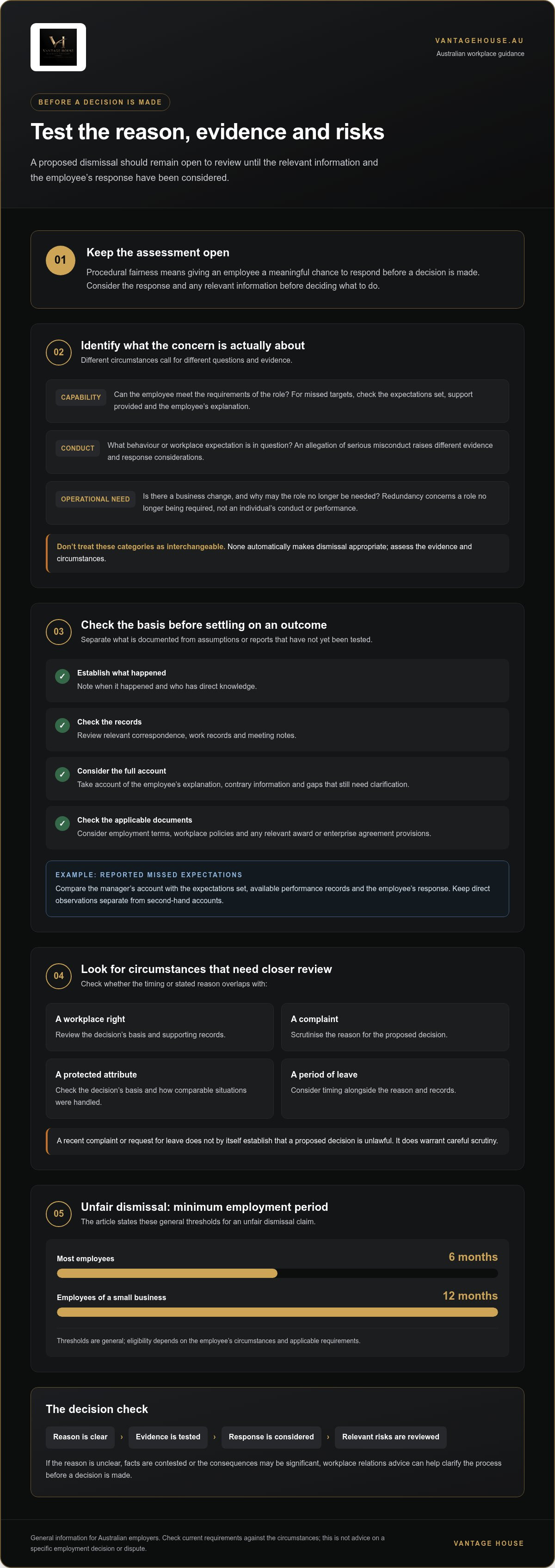
Capability concerns may involve an employee’s ability to meet role requirements. Conduct concerns relate to behaviour or compliance with workplace expectations. Other employment-related reasons can arise from operational needs. These categories aren’t interchangeable, and none automatically makes dismissal appropriate. The evidence and fair steps depend on what happened, the employee’s circumstances and the documents that apply to their employment.
For example, missed targets call for a close look at the expectations set, support provided and the employee’s explanation. An allegation of serious misconduct raises different questions about the evidence and how the employee can respond. A business change requires examining the role and why it may no longer be needed. In each case, identify the issue first, then assess whether the available information supports it.
This guide provides general information for Australian employers, not advice on a specific dispute or employment decision. The overview of unfair dismissal in Australia offers background, but it isn’t a substitute for checking current requirements against the circumstances. If the reason is unclear, the facts are contested or the consequences may be significant, workplace relations advice can help clarify the next step before dismissing an employee.
Assess the Reason, Evidence and Workplace Risks Before Deciding
Once you have identified the issue, pause before settling on an outcome. Check that the proposed reason is genuine, supported by information and consistent with the employment arrangements. A concern raised in a meeting or a manager’s impression may warrant investigation, but it isn’t automatically an established fact. Deciding first and looking for support afterwards can undermine both the reasoning and the record.
Procedural fairness is a consistent process that gives an employee a meaningful chance to respond before a decision is made. It helps keep the assessment open until relevant information has been considered, rather than treating a proposed dismissal as inevitable.
Test the basis for the proposed dismissal
Separate documented information from assumptions or reports that haven’t yet been tested. A practical review can include:
- What happened, when it happened and who has direct knowledge of it.
- Which records support the concern, such as relevant correspondence, work records or meeting notes.
- Whether the employee’s explanation, contrary information and gaps in the evidence have been considered.
- Which employment terms, workplace policies and applicable award or enterprise agreement provisions may be relevant.
For example, if a manager reports that expectations were repeatedly missed, compare that account with the expectations set, the available performance records and the employee’s response. Keep direct observations separate from second-hand accounts, and note where more information is needed. Check current requirements against the circumstances rather than assuming one rule applies to every employee. The Fair Work Ombudsman guidance on dismissal is a useful starting point for general information.
Check for risks that need closer review
Before dismissing an employee, consider whether the timing or stated reason overlaps with a workplace right, complaint, protected attribute or period of leave. A recent complaint or request for leave doesn’t by itself establish that a proposed decision is unlawful. It does warrant careful scrutiny of the decision’s basis, the records and how comparable situations have been handled.
Dismissal protections and unfair dismissal eligibility depend on the employee’s circumstances and the applicable requirements. For example, the minimum employment period for an unfair dismissal claim is generally six months, or 12 months for an employee of a small business. Not meeting that threshold doesn’t necessarily rule out other types of claim, including a general protections claim. Check current Fair Work Act requirements and official guidance before relying on an eligibility rule.
If accounts conflict, key documents are missing or a workplace right or protected attribute may be connected to the decision, get specialist workplace relations advice before proceeding. A structured review can help leaders test the evidence, identify unresolved risks and keep a clear record of how the decision was assessed. Workplace relations advice from Vantage House can support that assessment and help bring consistency to complex people-management decisions.
Follow a Fair Dismissal Process: Notify, Listen and Consider
A fair process gives the employee a genuine opportunity to understand and respond to the concerns before an outcome is settled. It also gives the employer a disciplined way to test the information and show how the decision was reached. The steps should fit the issue: performance concerns may call for discussion of expectations and support, while an allegation of serious misconduct may require a different, more urgent assessment. One process won’t suit every case.
Use this sequence as a practical framework, then adapt it to the circumstances, relevant workplace procedures and current requirements:
- Prepare: gather relevant information and identify the specific concerns that need a response.
- Notify: explain the concerns clearly, including the key facts the employee is being asked to address.
- Listen: give the employee a reasonable opportunity to respond and raise relevant context.
- Assess: consider the response and any new information alongside the evidence already gathered.
- Decide: make an open-minded decision, then record the reasons and material considered.
This is a framework, not a fixed script. The Government advice for businesses on ending employment can help you check general information. Apply it alongside the circumstances and relevant workplace documents.
Prepare a clear and balanced discussion
Before the meeting, organise relevant records and break each concern into clear, specific points. Avoid broad statements such as “poor attitude” unless you can explain the behaviour and its workplace impact. Check the organisation’s procedures, decide who will attend and keep the discussion respectful and focused. Consider whether a support person is relevant, and verify any process requirements against current guidance.
Give the employee enough information to understand what they’re being asked to respond to. For example, a discussion about missed expectations should identify the expectations and relevant instances, rather than rely on a general conclusion. For broader context on setting and reviewing performance expectations, see this employee performance review guide.
Consider the response before reaching an outcome
Listen without treating the meeting as a formality. The employee may dispute the account, explain a factor you haven’t considered or provide new information that changes the assessment. Record their response accurately, including any points that need follow-up. Don’t present dismissal as final if the decision is still under consideration.
After the discussion, compare the response with the evidence. Note what was accepted, what remains uncertain and why. A reasoned record should connect the concern, supporting information, employee response and eventual decision. That sequence helps show the outcome was considered rather than predetermined. If managers need support applying a consistent process when dismissing an employee, Vantage House provides practical workplace relations advice.
Communicate the Decision and Complete Final Employment Steps
Once you have made the decision, communicate it directly and respectfully, using language that matches the reason assessed. A clear message helps the employee understand the outcome and what happens next. Don’t introduce a new reason at this stage or overstate what the evidence established. If the decision differs from the initial proposal, explain the final basis accurately and record the reasoning.
Give the employee a clear outcome and explanation
Tell the employee the decision, effective date and practical next steps in plain language. Confirm the outcome in writing, including relevant arrangements such as the notice period or payment in lieu where applicable. Explain how work handover, return of employer property and final pay will be managed, without making promises before checking the details.
Keep the explanation proportionate. It should connect to the concerns raised and information considered, rather than rely on broad labels or unnecessary commentary. Protect other employees’ privacy by leaving out confidential details about their conduct, performance or circumstances. Share the decision internally only with people who need the information to carry out their responsibilities, and use appropriate channels for sensitive records.
Check notice, final pay and records
Before confirming dates or amounts, check the employee’s contract, any applicable award or enterprise agreement, relevant workplace policies and current official guidance. Notice requirements can depend on length of service, age and the employment arrangement. In some situations, payment in lieu may apply. Don’t assume a standard period or payroll practice fits every case.
Review final pay carefully. Check outstanding wages, accrued leave entitlements and any payment in lieu of notice that may be payable. Verify the applicable payment timing too, as requirements can depend on the circumstances and governing workplace documents. The Fair Work Ombudsman’s current information is a suitable reference for checking termination obligations before payroll is finalised.
A reliable close-out record connects the decision with its implementation. Keep the reasons considered, key evidence, the employee’s response, the decision-maker’s rationale and a copy of the written communication. Record the date and method of delivery, the effective termination date, and the calculations and documents used to check final entitlements. Store the material securely and limit access in line with workplace privacy practices.
Broader employer obligations can affect how dismissal records and final employment steps are managed. The Australian workplace compliance guide provides context for maintaining consistent compliance practices. Where circumstances are complex or records raise questions, practical workplace relations support can help clarify the close-out process. Workplace relations support from Vantage House can help review the process and document the final steps when dismissing an employee.
Build a Consistent Dismissal Approach with Workplace Relations Support
A reliable dismissal process follows a clear line from the reason for action to the records supporting the outcome. Leaders should be able to see how the evidence was assessed, what the employee said, why a decision was made and how the employment ended. A consistent framework helps avoid improvised steps while allowing the process to reflect the circumstances of each case.
For each matter, keep the core stages visible:
- Reason: identify the basis for considering dismissal.
- Evidence: collect and assess relevant information.
- Employee response: record and consider the employee’s account.
- Decision: document the reasoning and outcome.
- Close-out: retain communication and employment records, and complete final checks.
Turn individual decisions into a repeatable process
Set out who can raise concerns, who gathers records, who conducts discussions and who makes the final decision. Clear responsibilities reduce confusion and help ensure the decision-maker has the relevant information. Use a consistent record format to capture dates, documents reviewed, the employee’s response and the reasons for the outcome.
Store records securely and restrict access to people who need them for their role. Review the process periodically, particularly when workplace arrangements, internal policies or official guidance change. Consistent documentation supports sound governance and helps leaders explain how decisions were reached, but it can’t guarantee that a dispute won’t arise.
Know when to seek tailored workplace relations guidance
Some matters need closer assessment before action is finalised. Support can be useful when accounts conflict, important evidence is unclear, a complaint or workplace right may be connected to the decision, or the employer is unsure which requirements apply. These issues can make it harder to distinguish an appropriate next step from an avoidable process risk.
Practical workplace relations advice can help leaders review the facts, clarify responsibilities and apply a consistent approach across different cases. It can also identify questions to resolve before communicating a decision. This is particularly useful when dismissing an employee involves sensitive circumstances or several applicable workplace documents.
Vantage House provides employer-focused workplace relations advisory, HR support and compliance guidance. This support is advisory and does not include representation in court or Fair Work Commission hearings. A measured review before finalising a decision can bring structure to a complex process and strengthen the records behind it. Workplace relations support can help employers manage dismissal decisions.
Make the Next Decision with Greater Clarity
A dismissal decision can also prompt you to strengthen how your organisation handles difficult people matters in future. Consider whether managers know where to raise concerns, how to keep decision records and when to pause for guidance. A clear internal approach supports consistent leadership decisions without treating every case as identical.
If you’re weighing a complex situation or want to improve your process, Vantage House offers Australian workplace relations advisory and compliance guidance, alongside practical HR support for employers managing people-related decisions. This support can bring structure to the next step and help keep your approach aligned with workplace requirements.
For practical guidance on managing a dismissal decision, contact Vantage House for workplace relations support.
Frequently Asked Questions
Is an employer required to give an employee a warning before dismissal?
Not in every case. Whether a warning is appropriate depends on the reason for dismissal, the circumstances and applicable workplace requirements. For performance concerns, a warning may explain what needs to change, the expected standard and the timeframe for improvement. Serious misconduct may call for different steps. Before relying on a warning or proceeding without one, check the relevant workplace documents and current guidance, particularly if the facts are disputed.
Can an employee be dismissed without a performance management process?
Possibly, but the absence of a formal performance plan doesn’t by itself establish that dismissal is appropriate. The process should fit the issue. An allegation about a specific incident, for instance, may need fact-finding, while ongoing capability concerns may require close attention to role expectations and prior feedback. Check whether policies or employment documents set out steps to follow, and seek tailored advice if the employee has raised a workplace concern.
How much notice does an employer need to give when dismissing an employee?
Under the National Employment Standards, minimum notice is generally one week for up to one year of service, two weeks for more than one to three years, three weeks for more than three to five years, and four weeks for more than five years. An employee aged 45 or over with at least two years’ service generally receives an extra week. Check coverage, contract terms and current guidance before confirming notice or payment in lieu.
What happens if an employee disputes their dismissal?
An employee may raise the matter with the employer or pursue an external process, depending on the type of claim and their circumstances. An unfair dismissal application to the Fair Work Commission generally must be lodged within 21 days after the dismissal takes effect. Other claim pathways may have different requirements. Preserve relevant emails, meeting notes and decision records, and get prompt advice rather than waiting for an internal review to finish.
Is redundancy the same as dismissing an employee?
No. Redundancy generally relates to a role no longer being required, while dismissal may arise from an individual employment-related reason. For example, if a business removes a position but continues distributing the same work among staff, carefully assess whether the role is genuinely no longer needed. Classification depends on the facts and can affect consultation and other obligations, so check applicable requirements before describing the change as redundancy.
Can an employee bring someone to a dismissal meeting?
A support person may be appropriate, but the circumstances, workplace procedures and current guidance matter. A support person can provide personal support, while an advocate or representative may take a different role. If an employee asks to bring someone, clarify the meeting’s purpose and consider the request consistently with applicable requirements. Record the agreed arrangement, including who attended and whether the employee had a fair opportunity to participate.
What should an employer include in a dismissal letter?
A dismissal letter should state the outcome and key practical arrangements clearly, using wording that matches the decision and process. Depending on the circumstances, include the reason, effective date, notice or payment-in-lieu arrangements, and how final pay will be handled. Check dates and entitlements against payroll records and employment documents before sending the letter. Keep a copy of the final version and record when and how it was provided.


