

A retention problem is rarely solved by another perk. If capable employees are leaving, understanding how to reduce employee turnover rate starts with finding what is misaligned in the work itself, from workload and role expectations to recognition, progression and workplace relationships.
Recruitment costs and lost productivity are real pressures, while ongoing disengagement can weaken team confidence and workplace culture. It’s understandable to look for a quick fix, but lasting retention depends on identifying why people are leaving and addressing the conditions behind those decisions. Staff exits also need to be managed carefully, with attention to relevant workplace obligations and Fair Work requirements.
This guide sets out a practical, research-driven framework for assessing retention risks and building a more stable workforce. It explains how employee reviews and staff satisfaction insights can uncover patterns, and how sound workplace relations practices can reduce risk while supporting a more consistent employee experience. You’ll also find steps for turning findings into focused action, helping your organisation retain capability, reduce recruitment pressure and make decisions with greater clarity.
Key Takeaways
- Map the direct and less visible effects of staff departures to understand where turnover is putting pressure on your business.
- Use stay interviews and objective employee reviews to identify retention risks before they lead to resignations.
- Check that award coverage, pay and employment arrangements provide a fair and reliable foundation for trust.
- Learn how to reduce employee turnover rate with a structured approach to recruitment, onboarding and ongoing retention.
- Recognise when external HR support can provide a clearer view of staff satisfaction and workplace relations risks.
Quantifying the Real Impact of Staff Turnover on Your Business
A resignation creates costs beyond the recruitment invoice. Advertising, recruiter fees and onboarding draw on the budget, while managers and experienced team members spend time selecting and training a replacement. A vacancy can also delay work, increase overtime or shift client responsibilities to people already carrying a full workload.
To estimate the cost of an exit, use your own records rather than relying on a generic industry figure. Add recruitment and advertising expenses, the value of internal time spent hiring and onboarding, and measurable costs from temporary cover, delayed work or rework. Then assess effects that are harder to price, such as disrupted client relationships and undocumented knowledge. Keep assumptions visible and avoid counting the same lost hours in more than one category.
This broader view reflects the different causes and forms of Employee turnover. In 2026, treating repeated departures as a strategic risk helps employers protect operational continuity, service quality and the capacity of their remaining team.
Beyond the Balance Sheet: The Cultural Cost
Frequent departures can create a revolving-door impression for employees and clients. Remaining staff may need to absorb extra work, leaving less time for their own priorities and placing a sustained burden on high performers. As experienced employees leave, practical knowledge about processes, clients and common issues can leave with them. Handovers may take longer, service may become inconsistent and avoidable mistakes may increase. Track these effects alongside direct costs to understand the wider impact of turnover.
Turnover as a Symptom of Governance Gaps
Look for patterns before settling on a cause. Compare exits by team, role, tenure and reporting line, while taking care with small groups so individual employees aren’t identifiable. If departures cluster under a particular leadership style or in one department, review workload, support and how expectations are communicated. Early resignations may point to a gap between the role described during recruitment and the work employees encounter. Reduced participation or initiative, sometimes described as “quiet quitting”, can signal disengagement, but calls for a thoughtful conversation rather than an assumption about intent.
These patterns make turnover useful diagnostic information, not just a lagging measure. Objective employee reviews and staff satisfaction research can help test whether concerns are isolated or reflect a broader workplace issue. That evidence gives employers a clearer starting point for how to reduce employee turnover rate: address the conditions driving exits rather than relying on surface-level fixes.
Conducting Objective Research to Identify Retention Risks
Retention decisions are stronger when they’re based on evidence, not assumptions. Before changing pay, policies or management practices, gather feedback from current and departing employees, then compare it with patterns in reviews, satisfaction findings and exit records. This helps distinguish an isolated concern from a recurring workplace issue and directs effort towards causes employees actually experience.
Employee reviews can provide a structured way to uncover friction that may not surface in routine conversations, such as unclear role expectations, workload pressure or inconsistent communication. A staff satisfaction programme can build on this by gathering feedback consistently and tracking themes over time. Use clear questions, explain how responses will be handled and show employees what follow-up results. Where staff may be reluctant to speak openly with internal HR, research conducted externally may create more distance from workplace relationships. It doesn’t guarantee more candid feedback, so explain how information will be used and protect confidentiality.
The Power of Stay Interviews
Stay interviews help employers understand what supports engagement before an employee decides to leave. Ask what they value in their role, what makes work harder than it needs to be, and what change would improve their experience. Hold the discussion privately, listen without becoming defensive, and be clear about what can and can’t be changed. Then act on practical feedback, such as clarifying priorities or addressing a communication gap, and report back on progress.
Analysing Exit Data Methodically
“Personal reasons” may be the recorded explanation, but it doesn’t always reveal the full context. Review exit feedback alongside department, tenure, role and manager patterns. Note recurring concerns about pay, award interpretation or employment arrangements, then check the details before drawing conclusions. Repeated concerns can point to a process that needs closer review, rather than proving a breach. This evidence can also help refine recruitment and staff placement services, so role expectations and candidate alignment are considered more carefully.
Research only creates value when it informs measured action. Prioritise themes that recur across different sources, assign responsibility for follow-up and check whether staff feedback changes over time. Broader guidance, such as Effective Employee Retention Strategies, can complement internal findings, but it shouldn’t replace evidence from your own workplace. This disciplined approach gives employers a practical basis for how to reduce employee turnover rate, while avoiding costly changes based on guesswork. For support with employee reviews and staff satisfaction research, consider workplace research support.
Ensuring Compliance and Fair Pay as a Retention Foundation
Retention isn’t built on perks alone. Employees need confidence that pay, conditions and workplace policies are applied consistently. Modern Award compliance is a baseline for that trust: a classification or pay error can undermine confidence, prompt grievances and contribute to an employee’s decision to leave. Reviewing arrangements early can help employers address issues and reduce avoidable administrative friction.
Modern Award Interpretation and Fairness
Check that each employee’s classification and pay arrangements match the work they perform and the applicable Award or agreement. Job titles alone may not tell the full story, so review actual duties and seek guidance where interpretation is uncertain. Regular, documented compliance reviews can help identify inconsistencies before they become entrenched. Fairness is also experienced day to day: employees notice whether decisions are explained and similar situations are handled consistently.
Underpayment or misclassification can damage loyalty even when it results from an administrative oversight. Employees may question whether other commitments are being met. A careful review of pay practices, records and employee concerns helps employers address discrepancies transparently and demonstrate integrity.
Governance Beyond the Minimums
The National Employment Standards establish minimum entitlements for most employees, while Awards set additional conditions for many roles. Internal policies should reflect applicable requirements and clearly explain the organisation’s expectations, processes and commitments. Review them when workplace arrangements change, and make sure managers apply them consistently. Clear guidance supports dependable decisions and reduces confusion for employees and supervisors.
Proactive workplace relations advisory can help employers interpret Awards, review policies and address concerns before they escalate. This is a practical risk-management approach, not a substitute for obtaining appropriate advice on complex matters. For context on processes that apply when an employment relationship ends, consult the Australian Government’s Ending employment guidance. Sound processes at every stage can reinforce trust and support a clearer answer to how to reduce employee turnover rate.
For further governance context, read Strategic Workplace Relations: 2026 AU Employer Guide. Employers seeking help with award interpretation, compliance guidance or workplace relations can also explore workplace relations advisory.
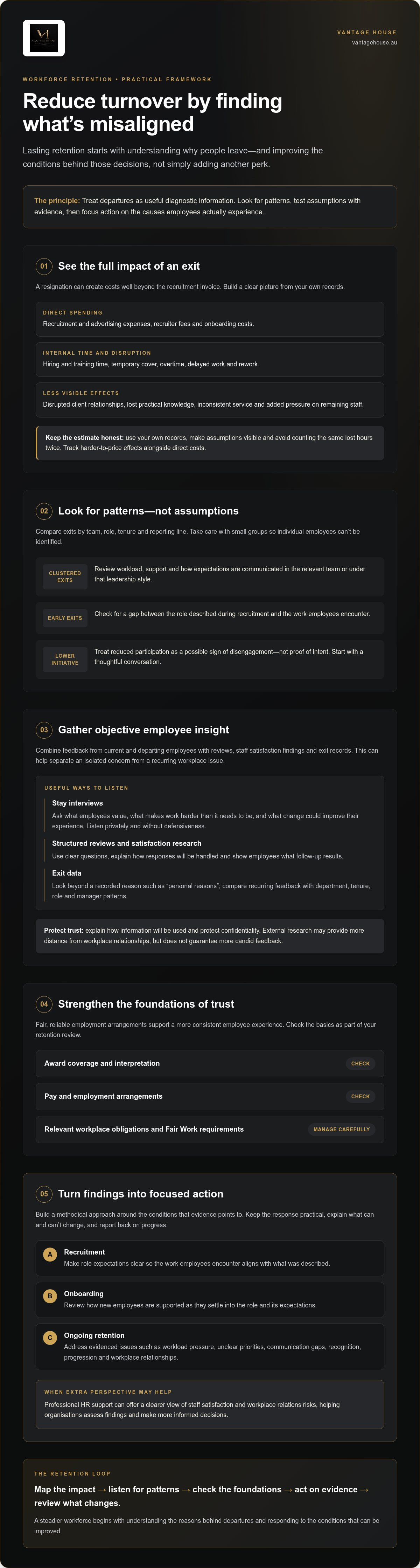
How to Reduce Employee Turnover Rate: A Methodical Retention Framework in Five Steps
Retention is shaped across the employee lifecycle, not just at the point of hire. A consistent framework helps turn workplace feedback into practical improvements, from setting accurate expectations to supporting development and effective management. Use the steps below as a cycle: review what’s working, address gaps and adjust as roles and business needs change.
Step 1: Aligning Recruitment with Reality
Make job descriptions reflect the role’s actual duties, workload and reporting arrangements. During recruitment and staff placement, assess technical capability alongside the behaviours and values needed to work effectively in the team. A realistic job preview gives candidates a candid picture of the role’s everyday demands before they accept it, helping both sides assess fit.
Step 2: Structure the first 90 days. Give new employees a clear plan covering role expectations, key contacts, training and regular check-ins. Set priorities for the first weeks, explain how work will be assessed and make time to resolve practical questions. A structured onboarding programme helps people understand how to contribute and where to seek support.
Step 3: The Role of Continuous Feedback
Don’t rely on an annual review as the only opportunity to discuss performance. Schedule regular pulse checks to clarify progress, surface obstacles and agree on manageable next steps. An employee performance review framework can help make expectations and review conversations more consistent. Equip managers to give specific, measured feedback that recognises progress and identifies support needs.
Step 4: Strengthen front-line leadership. Managers influence how expectations, feedback and day-to-day decisions are experienced. Provide development that helps them set priorities, hold constructive conversations and respond consistently to concerns. Reinforce these practices through regular manager check-ins, so leadership capability is supported rather than assumed.
Step 5: Make development visible. Discuss employees’ strengths and career interests, then identify relevant learning or opportunities to build capability. Clear pathways don’t need to promise promotion; they should show how employees can grow their skills and take on appropriate responsibility. Review these plans regularly and explain what opportunities are available.
Together, these steps provide a practical answer to how to reduce employee turnover rate: align the role with the person, support them through the early months, and maintain clarity and development over time. For help with recruitment, staff placement or employee reviews, explore HR and recruitment support.
Integrating Professional HR Support to Stabilise Your Workforce
Managing HR internally can be workable while processes are straightforward and responsibilities are clear. As a business grows, workplace concerns become more complex, compliance questions take longer to resolve, or managers handle issues inconsistently, it may be time to consider professional support. These are signs that a structured external perspective could help, not that internal staff have failed.
The Value of an External HR Partner
Workplace relations advisory can help employers assess complex matters, interpret award requirements and review whether workplace practices are being applied consistently. This supports risk management and gives business owners a clearer basis for decisions. It can also reduce the time they spend trying to resolve every HR issue themselves, leaving more capacity for operational priorities.
Employee reviews and staff satisfaction research can strengthen workplace feedback programmes. Employees may be more comfortable sharing concerns when feedback is gathered and assessed outside their direct reporting line. An external perspective can also help identify themes across teams without treating one person’s account as a complete picture. In performance management and reviews, a consistent process supports clearer expectations and more objective conversations.
Agree on the purpose of any review before it begins. Decide what feedback will be collected, how it will be handled, who will see the findings and how the organisation will respond. Employees are more likely to engage when the process is clear and leaders follow through on practical findings.
Long-term Stability through Strategic Advisory
Workplace conditions and business priorities can change. Ongoing HR support helps employers revisit policies, staff feedback and workplace practices as those changes occur, rather than relying on processes that no longer fit. Consistent governance can help managers respond more reliably, while employee research can highlight emerging concerns before they contribute to disengagement or resignations.
This is a practical foundation for how to reduce employee turnover rate. Recruitment, compliance guidance and employee reviews can work together: clearer role alignment supports hiring, sound workplace practices build trust, and objective feedback shows where further action is needed. The result is a more informed approach to retention, with less administrative pressure on business owners and more visibility over workforce risks.
Employers looking to strengthen their workplace relations approach can contact Vantage House to discuss HR support, compliance guidance and employee research.
Build a More Stable Workforce with Clear, Measured Action
Reducing turnover starts with understanding what’s driving it. Use employee feedback and review findings to identify retention risks, then address the workplace conditions behind them. Consistent recruitment, fair and clearly communicated employment practices, and ongoing support for managers can help create a more dependable employee experience.
There’s no single fix for how to reduce employee turnover rate. The strongest approach connects objective research with practical workplace relations decisions, so improvements reflect what employees and the business actually need. For Australian employers, workplace relations advisory, employee research and reviews, and tailored HR support can help bring greater clarity to that work.
Contact Vantage House to discuss a practical approach to retention. With a clearer view of the risks and the right support in place, you can take steady steps towards a more engaged and stable team.
Frequently Asked Questions
What is the average employee turnover rate in Australia?
There isn’t one fixed rate, as figures vary by reporting period, industry and business size. The research figures compiled for this guide place the Australian average at 13.5% in a June 2026 report, compared with 16% in data from late 2024. Treat these as reference points, not targets for every employer. Compare your own rate over consistent periods and investigate patterns by team, role and length of service.
How do I calculate the cost of employee turnover for my business?
Add the direct expenses of replacing an employee, including recruitment fees, advertising and onboarding time. Then estimate internal hours spent interviewing, training and covering the vacancy, along with measurable effects such as delayed work or rework. Consider less visible impacts, including pressure on the remaining team or disrupted client relationships. Record your assumptions and avoid counting the same loss twice. Your estimate can be refined as better business data becomes available.
Can Modern Award non-compliance cause higher staff turnover?
It can contribute to employees losing trust and deciding to leave. Incorrect classification, pay or conditions may lead to frustration and concerns about whether workplace commitments are being met. Check the applicable Award against employees’ actual duties and arrangements, and seek compliance guidance if interpretation is unclear. Addressing an identified issue promptly and communicating clearly can help limit administrative friction, though it won’t resolve other causes of dissatisfaction on its own.
What are the most effective employee retention strategies for small businesses?
Start by finding out why employees stay and what may prompt them to leave. Use stay interviews, staff satisfaction feedback and exit information to identify recurring issues, then focus on practical changes. Accurate recruitment expectations, structured onboarding, fair and consistent workplace practices, useful feedback and visible development opportunities can all support retention. Prioritise changes that address evidence from your own workplace rather than adopting perks that may not resolve the underlying problem.
Should I use an external consultant for employee satisfaction surveys?
An external consultant can be useful when employees may hesitate to share concerns with their manager or internal HR team. External research can help gather and interpret feedback, while employee reviews can reveal themes that aren’t obvious in routine conversations. Before starting, clarify how responses will be handled, who will see the findings and how the business will act on them. External input should complement, not replace, appropriate internal follow-through.
How does a structured onboarding programme help with retention?
A structured onboarding programme gives new employees a clearer start by explaining their responsibilities, priorities, key contacts and available support. For example, an employer might set learning goals, schedule check-ins and confirm role expectations across the first 90 days. This helps surface confusion or practical barriers early, before they become entrenched. Onboarding can strengthen role confidence, but it works best when managers continue providing clear communication and feedback after the initial period.
What role does leadership training play in reducing staff turnover?
Leadership training can help managers set clear expectations, give constructive feedback and respond consistently to workplace concerns. These everyday interactions influence whether employees feel supported and understand how their work is assessed. Training is most useful when linked to observed needs, such as unclear priorities or inconsistent review conversations, and reinforced through ongoing guidance. It’s one part of how to reduce employee turnover rate, alongside fair practices, employee feedback and suitable development opportunities.
Is it always about the money, or do employees leave for other reasons?
No. Pay matters, but employees may also leave because of excessive workload, poor workplace relationships, limited career opportunities, lack of recognition or a mismatch between the role promised and the work experienced. These issues can overlap, so avoid assuming a resignation has a single cause. Review stay interview feedback, exit information and workplace patterns together. This gives employers a more grounded view of what may need attention than relying on salary changes alone.


