

A polished employee value proposition can weaken trust if it describes a workplace employees don’t recognise. For Australian employers, creating an employee value proposition means more than listing benefits or refining recruitment messages. The promise needs to reflect what employees actually experience, from leadership and development to flexibility and day-to-day working conditions.
The terms can be easy to confuse. An EVP sets out what employees can expect in return for their contribution. Employer brand shapes how the organisation is perceived as a place to work, while benefits are one part of the overall offer. Without reliable employee feedback, it can be difficult to know which strengths are genuine and where the experience needs attention.
This guide explains how to build an evidence-based EVP that supports your talent priorities without overpromising. You’ll learn how to distinguish the EVP from related concepts, gather useful perspectives from employees and leaders, and turn evidence into a clear, credible proposition. It also covers how to communicate and review that proposition as your workforce and organisation change.
Key Takeaways
- Clarify how the EVP differs from your employer brand and benefits, then connect it to your organisation’s talent priorities.
- Use a structured process for creating an employee value proposition, from defining the business need to testing and reviewing the final themes.
- Compare proposed EVP promises with employee feedback and current workplace practices to identify gaps before communicating them.
- Translate validated themes into consistent recruitment, onboarding and internal messages, and assign clear owners to keep them accurate.
- Consider structured employee research or staff satisfaction work when internal feedback is limited or an independent perspective would help.
What creating an employee value proposition means for an Australian employer
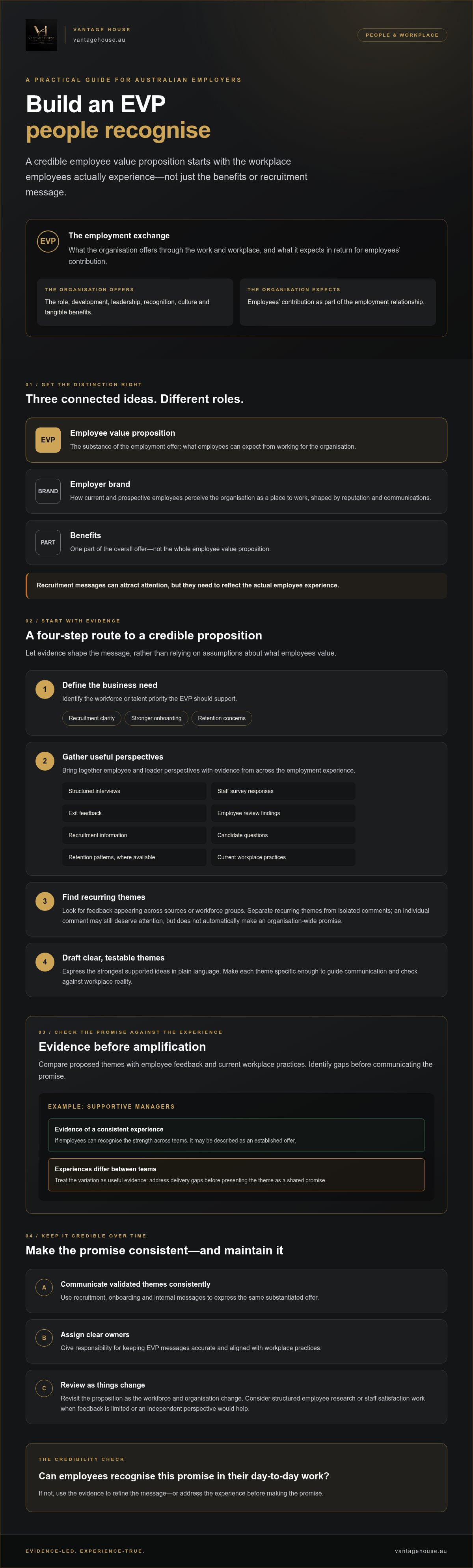
An employee value proposition (EVP) is the overall exchange between an employer and its employees: what the organisation offers through the work and workplace, and what it expects in return. It includes more than pay and benefits. Put simply, an EVP is an evidence-based account of what employees can expect from working for an organisation, beyond a list of benefits.
Creating an employee value proposition gives employers a clearer way to explain that exchange at each stage of the employment relationship. It can help prospective employees assess whether a role suits them, give new starters a consistent picture of the workplace, and help current employees understand what the organisation values. A credible proposition can support engagement and retention, but it cannot guarantee either. Employees’ experience of the offer depends on how it is delivered in practice.
The EVP describes the substance of the employment offer. Employer brand shapes how current and prospective employees perceive that offer through recruitment messages, workplace reputation and other communications. The Employee Value Proposition (EVP) provides a useful foundation for understanding how the concept relates to employer branding. The distinction matters: persuasive recruitment material can attract attention, but it needs to reflect the actual employee experience.
What does an employee value proposition include?
An EVP brings together aspects of work employees may value, such as the nature of the role, development opportunities, leadership, recognition, workplace culture and tangible benefits. The balance varies between organisations and workforces. Flexibility may matter to one group, while meaningful development or clear recognition may be more relevant to another. The proposition should reflect those differences rather than assume every employee values or receives the same things.
For example, an organisation might identify supportive managers as a strength, while employees’ experiences differ across teams. That variation is useful evidence. It helps leaders decide whether to describe the theme as an established offer or first address gaps in delivery.
How does an EVP differ from employer branding?
Employer branding communicates an organisation’s employment offer to current and prospective employees. It may appear in job advertisements, careers information, onboarding materials and internal communications. The EVP is the substance those messages should represent. If recruitment material highlights development, employees should be able to identify genuine opportunities to learn and progress.
Consistent workplace practices help keep the promise credible across teams and stages of employment. Employers can explore this connection in the strategic workplace relations guide, which explains how structured workplace relations support can contribute to consistent practices.
Build an employee value proposition framework from evidence
Creating an employee value proposition is more reliable when decisions start with evidence, rather than assumptions about what employees value. A useful principle is: let evidence shape EVP messaging so the promise reflects what employees can recognise in their day-to-day work.
Use a clear sequence to move from a business need to a proposition that can be tested and maintained. Gartner's EVP guide also provides a reference point for considering transparency in EVP design.
- Define the business need. Identify the workforce or talent priority the EVP should support, such as improving recruitment clarity, strengthening onboarding or addressing retention concerns.
- Gather evidence. Bring together structured interviews, staff survey responses, exit feedback and employee review findings. Where available, also consider recruitment information, candidate questions and retention patterns.
- Identify recurring themes. Look for feedback that appears across different sources or workforce groups. Separate consistent themes from isolated comments. An individual comment may still warrant attention, but should not automatically become an organisation-wide promise.
- Draft the themes. Express the strongest supported ideas in plain language. Keep each theme specific enough to guide communication and check against workplace practice.
- Test the claims. Compare each draft theme with policies, management practices and everyday work. Identify gaps, supporting evidence and an accountable owner before using the message externally.
- Review and update. Revisit the evidence as workforce priorities and workplace practices change. The EVP should remain aligned with what the organisation can deliver.
Which employee evidence should inform an EVP?
Use more than one source where possible. Structured interviews and staff surveys can help identify employee perspectives. Exit feedback and employee review findings may show what people valued or found inconsistent. Compare these insights with leadership assumptions and candidate questions from recruitment. Interpret findings in context: the size and representation of the group providing feedback affect how confidently the results can be applied across the workforce. Protect confidentiality when collecting and reporting feedback, particularly where small groups could make individual responses identifiable.
How do you turn research into EVP themes?
Group recurring feedback into a small set of clear themes employees can recognise, such as supportive leadership or opportunities to develop. Then check whether actual policies, manager behaviours and everyday work support each claim. Record the evidence, any gaps and the owner responsible for addressing them before drafting external-facing language. If internal teams need a structured way to gather employee perspectives, employee research and staff satisfaction support may help inform the work.
Compare EVP themes with the employee experience before making promises
An EVP is credible when employees can recognise its claims in their work experience. Before describing a theme as an organisational strength, compare it with current practice and employee feedback. This helps distinguish an established part of the offer from an aspiration that needs operational change first. As discussed in Rethink Your Employee Value Proposition, a compelling proposition can include longer-term value such as development, community and purpose. Those themes still need to be grounded in what employees actually experience.
Use a simple comparison to make evidence, gaps and next steps visible before drafting recruitment messages.
| Proposed theme | Employee evidence | Current practice | Gap | Next action |
|---|---|---|---|---|
| Opportunities to develop | Employees value learning, but report uneven access | Development is available in some teams | Experience varies by manager | Clarify access and assign an owner to review consistency |
| Supportive leadership | Feedback recognises some managers’ support | Practices differ across teams | Claim may sound universal | Use narrower wording or address practice differences first |
These examples are illustrative. The comparison should reflect your own evidence, not replace gathering it. When creating an employee value proposition, a theme with consistent support may be described as part of the current offer. A theme supported only in some teams needs more precise wording or further work before it becomes a broad promise.
How can employers test EVP claims for credibility?
Share proposed themes with employees across relevant roles and ask whether the wording reflects their experience. Check their responses against current practices, available feedback and recruitment messages. Look for differences between teams or job types, rather than relying only on a general impression. Revise broad or absolute claims such as “everyone has clear progression” if the organisation cannot consistently support them.
How should leaders handle gaps between the promise and reality?
Classify each gap before deciding what to communicate. It may be a communication issue, where a genuine offer is not clearly explained; a practice inconsistency, where delivery varies; or a longer-term improvement need. Assign an accountable owner and a practical action for each gap. Until the practice is established, describe it as a development priority, not a settled organisational strength. An EVP should clarify the employment offer, not disguise unresolved workplace issues.
Turn the EVP strategy into a practical communication and review plan
Once EVP themes have been validated, translate each into clear examples for the places employees and candidates encounter the organisation. Consistency matters, but the wording should suit the audience and reflect real working conditions. For example, recruitment information about a development theme could describe the types of learning available. During onboarding, new starters could be shown where to find development support.
Creating an employee value proposition is not a one-off communications exercise. Assign responsibility for keeping its messages accurate across candidate and employee touchpoints, and make review part of the organisation’s people processes.
How should an EVP be communicated to employees and candidates?
Use specific, plain language rather than broad claims about being a great place to work. Managers should understand the approved themes and have genuine examples they can explain in their own words. They should not rely on a script that promises every employee the same experience. HR can check job advertisements, careers information, onboarding materials and internal communications against the agreed EVP before sharing them. This reduces the risk of candidates hearing one offer and employees experiencing another.
For example, if flexibility is a validated theme, explain which arrangements are available and how employees can discuss them. Avoid implying that every role has identical options unless that is accurate. Clear boundaries help candidates make informed decisions and give current employees a more dependable account of the offer.
How can employers review whether an EVP remains relevant?
Set a review cadence that fits your organisation’s planning and feedback processes. Bring together employee feedback, recruitment observations and retention information where available. Consider whether the themes still reflect workforce needs and current practices, particularly when roles or organisational conditions change. No single indicator proves that an EVP is working. Patterns across sources can show where messages remain relevant or need attention.
Keep a record of what changed, why the wording was updated and who approved it. This gives HR and leaders a shared reference when updating communications or responding to employee feedback. It also helps distinguish a change in the actual offer from a change in how the organisation explains it.
Where internal teams need more structure or an independent perspective, Vantage House employee research and HR support can help inform employee feedback and communication planning.
Use employee research and HR support to strengthen your EVP
An EVP needs ongoing attention after its themes have been agreed. The work follows a practical sequence: define the business need, gather employee evidence, agree on themes, test each claim against workplace practice, then maintain delivery and review the messages. External support can help with parts of this process when internal teams need additional research capability, capacity or objectivity. It does not transfer responsibility for the employment offer to an adviser. Leaders remain accountable for workplace decisions and for delivering what the organisation communicates.
Vantage House provides employee reviews and research, staff satisfaction programs and HR support for Australian employers. These services may help an organisation better understand employee perspectives and consider how they relate to proposed EVP themes. They are useful inputs to the work, not a packaged or standalone EVP product. No particular research result should be assumed in advance.
When can external employee research help?
Consider external input if employees may be reluctant to share candid feedback internally, if existing feedback methods need review, or if the team lacks capacity to gather and interpret perspectives. Structured staff satisfaction work or employee research can provide a more organised view of what employees recognise, value or experience differently. The findings can inform leadership decisions, but leaders must assess priorities and oversee any changes to workplace practice.
What should employers prepare before seeking support?
Start with a defined business question. For example, clarify whether you need to understand employee views on development, leadership or another proposed theme. Identify the employee groups involved and the decisions the research should inform. Then gather material that may provide context, such as existing feedback, recruitment messages and relevant workforce information. This preparation helps keep the work focused and makes it easier to compare employee perspectives with the claims the organisation is considering.
Be clear about the type of support you need. Vantage House provides workplace relations advice and HR support, alongside employee research and staff satisfaction capabilities. This is advisory support, not legal representation in court or Fair Work Commission hearings, and it does not replace the employer’s responsibility for decisions and implementation.
For help gathering employee perspectives or reviewing HR considerations, explore employee research and HR support from Vantage House.
Build an EVP employees can recognise and trust
A credible employee value proposition is grounded in the experience your organisation can deliver, not simply the message it wants to promote. Creating an employee value proposition therefore calls for evidence, careful testing and clear ownership. Employee feedback can help leaders distinguish established strengths from areas that need attention before they become promises.
Keep the proposition useful by linking its themes to recruitment, onboarding and everyday communication, then reviewing them as employee perspectives and workplace practices evolve. This helps maintain a consistent account of the employment offer without suggesting every employee has the same experience or guaranteeing retention outcomes.
Where internal capacity or objectivity is limited, Vantage House’s employee reviews and workplace research, staff satisfaction programs and HR support can help inform the work. Learn about Vantage House’s employee research and HR support.
With a measured process and honest communication, employers can build an EVP that gives employees and candidates a clearer view of what working for the organisation genuinely involves.
Frequently Asked Questions
What is an employee value proposition?
An employee value proposition (EVP) is the overall exchange between an employer and its employees: what the organisation offers through the work and workplace, and what it expects in return. It can include pay and benefits, as well as development, leadership, recognition and workplace culture. A useful EVP describes the employment experience employees can genuinely expect, rather than presenting a benefits list or making claims the organisation can’t consistently support.
How do you create an employee value proposition?
Start by defining the business need, such as improving recruitment clarity or understanding retention concerns. Gather evidence from employee feedback, exit information, recruitment observations and workforce records where available. Identify recurring themes, draft a clear proposition, then test each claim against current policies and everyday practice. Creating an employee value proposition this way helps distinguish established strengths from aspirations that need work before they can be presented as part of the current offer.
What should an employee value proposition include?
An EVP should describe the parts of the employment experience that matter to your workforce and that the organisation can support in practice. These may include the nature of the work, development opportunities, leadership, recognition, culture, flexibility and tangible benefits. The right mix depends on the organisation and its employees. Use feedback to identify relevant themes, and avoid suggesting that every employee values the same things or receives an identical experience.
What is the difference between an EVP and an employer brand?
The EVP describes the substance of the employment offer: what employees can expect from working for the organisation. Employer brand is how that offer is communicated and perceived by current and prospective employees. For example, an EVP theme might be access to development, while the employer brand communicates that theme through recruitment material and workplace messages. Those messages should match actual opportunities, or the difference between the promise and experience may undermine trust.
How do you measure whether an employee value proposition is working?
Review employee feedback alongside relevant recruitment and retention information, such as candidate questions, exit feedback and patterns in workforce records. Check whether employees recognise the EVP themes in their experience and whether recruitment messages accurately describe the offer. No single indicator proves the EVP is effective, and outcomes may have several causes. Use evidence to identify where the proposition remains credible, where delivery varies and what needs further investigation.
Can a small business create an employee value proposition?
Yes. A small business can develop a useful EVP without a large research programme. Begin with a clear business priority and gather practical input through structured conversations or existing employee feedback. Compare the themes that emerge with current working practices, then explain the offer in straightforward language. Be careful not to treat a small number of comments as representative of everyone. If internal capacity is limited, external employee research or HR support may help.
How often should an employee value proposition be reviewed?
Set a regular review point that fits your organisation’s planning and feedback processes, and revisit the EVP sooner when roles, workforce needs or workplace practices change. Review employee perspectives alongside recruitment observations and retention information where available. Record which themes or messages have changed, the evidence behind the change and who approved it. This keeps communications aligned with the current offer without requiring the organisation to rewrite its EVP without a clear reason.


